Staying connected feels good, but it does far more than lift your mood. Social isolation in seniors is linked to a higher risk of heart disease, stroke, depression and early death, and the World Health Organization now calls for social connection to be treated as a public health priority.
This guide brings together the latest Australian evidence, including Ending Loneliness Together’s State of the Nation report, national data from the Australian Institute of Health and Welfare (AIHW) and research from Beyond Blue. It busts a common myth about which age group is loneliest, explains why isolation and loneliness aren’t the same thing, and shares practical ways to help an older person you love stay connected.
Loneliness and social isolation are not the same thing
The two words often travel together, but they describe different experiences. The AIHW defines them like this:
- Social isolation: having few relationships or social roles, and infrequent contact with other people. It can be measured.
- Loneliness: a distressing feeling that your connections aren’t enough, and wanting more or better relationships.
You can be isolated without feeling lonely, and you can feel lonely in a full house. For older people the difference matters, because isolation often creeps in quietly after a big life change. A study by the Australian Institute of Family Studies found that some isolated older people do not recognise their isolation as a problem.
What the data says about loneliness and older Australians
Loneliness: older Australians are not the loneliest group
Ending Loneliness Together’s State of the Nation Report: Social Connection in Australia 2023 surveyed 4,026 Australians aged 18 to 92. It found that almost one in three Australians (32%) feel lonely, and more than one in six (17.5%) experience severe loneliness.
The report also uncovered a common misconception. 42% of Australians believe loneliness mainly affects people aged 65 and over. Yet older people were the least likely of any age group to say they feel lonely often or always:
| Age group | Lonely often or always |
|---|---|
| 18–24 | 22% |
| 25–34 | 15% |
| 35–44 | 15% |
| 45–54 | 18% |
| 55–64 | 14% |
| 65–74 | 11% |
| 75+ | 5% |
National figures tell a similar story. AIHW data from the HILDA Survey shows 15% of Australians aged 65 and over reported loneliness in 2024, down from 20% in 2001.
Social isolation: a growing concern for older Australians
Isolation is a different picture. A University of Sydney study published in the International Journal of Epidemiology in September 2026 found chronic social isolation in Australia roughly doubled between the early 2000s and 2023, from 10.3% to 20.5% of people. In that study, older adults had the highest rates of isolation of any age group throughout the study, and the biggest increases over time. Worldwide, the WHO estimates social isolation may affect up to one in three older adults.
So while many older Australians are resilient and content, a growing number have very little regular contact with anyone. That gap is exactly what social support is designed to fill.
Why social isolation in seniors is a serious health risk
Loneliness and isolation don’t just affect how you feel. They affect your body too.
Beyond Blue’s Connections Matter booklet summarises research showing that people who are lonely are more likely to report symptoms of depression and are admitted to hospital more often. They also have around double the risk of obesity, higher blood pressure and a greater risk of heart attack. The reverse is also true: older people who stay connected tend to report a better quality of life, slower progression of dementia and mental decline, and need less help around the home.
The State of the Nation report backs this up. Lonely Australians were twice as likely to have a chronic disease, and 4.6 times as likely to have depression, as people who weren’t lonely.
Globally, the WHO Commission on Social Connection links loneliness to an estimated 871,000 deaths a year, or around 100 every hour. The health risks it identifies include:
- Stroke and heart disease
- Diabetes
- Cognitive decline
- Depression and anxiety
- Earlier death
Who is most at risk of isolation?
Isolation rarely happens overnight. It usually follows a change that makes someone’s world a little smaller. Australian research points to some common triggers:
- Losing a partner or close friend
- Retiring or moving house
- Giving up a driver’s licence, or having limited transport
- Declining health, mobility or a disability
- Caring for a partner (37% of carers feel lonely, compared with 30% of non-carers)
- Living alone (40% of people who live alone feel lonely, compared with 30% of those who don’t)
- Financial stress
Language and culture matter too. If you moved to Australia later in life, or English is your second language, mainstream activities can be harder to join and family may live far away. Cultural groups and in-language support can make a real difference.
Signs an older loved one may be isolated
Because many people don’t describe themselves as lonely, family and carers are often the first to notice. Look out for:
- Rarely leaving the house, or cancelling plans they used to enjoy
- Dropping out of clubs, hobbies or their faith or cultural community
- Long stretches without a visitor or phone call
- Changes in eating, sleeping or personal care
- Seeming flat, withdrawn or more forgetful
- Saying they don’t want to be a burden
One sign on its own doesn’t mean someone is isolated, but a few together are worth a gentle conversation. If you’re worried about their mood, encourage a chat with their GP.
Practical ways to help an older person reconnect
- Start small: Beyond Blue suggests beginning with something within their comfort zone, like coffee with one person or a short local outing.
- Keep in regular contact: even a brief daily phone call helps. Beyond Blue notes that regular contact, however short, can reduce loneliness.
- Help them get online: video calls and messaging keep families close across distances.
- Find local groups: councils, libraries, seniors centres and cultural groups all run activities. Our guide to the best social groups and activities for seniors on the Gold Coast is a good place to start.
- Try more than once: it’s common to try a few groups before finding the right fit.
- Encourage volunteering: giving time to others is one of the best ways to feel part of something.
How aged care support can keep seniors connected
When isolation is tied to health, mobility or transport, government-funded aged care can help. Eligible older people can receive social support, transport and community activities through the Commonwealth Home Support Programme (CHSP) or the Support at Home program, which replaced Home Care Packages on 1 November 2025. Under Support at Home, social support sits within independence supports. Eligibility is decided through an aged care assessment, and we can help you with accessing My Aged Care.
At Cura, our social support and community engagement service is built around what matters to you. It can include:
- Individual social support, depending on assessed needs and service availability
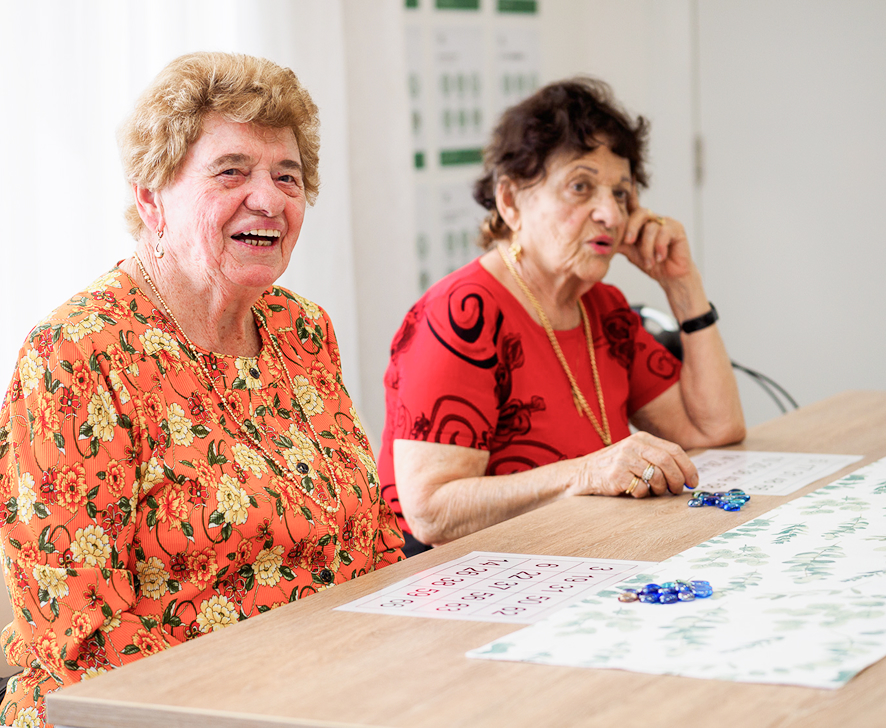
- Group activities, cultural celebrations and bus trips through our Wellness and Activity Centre in Ashmore
- Support to stay connected with your cultural or faith community
- Help using phones, tablets and video calls
- Accompanied outings to appointments, shopping and social events
People receiving Support at Home, or approved and waiting for it, who are socially isolated may also be eligible for free visits through the Aged Care Volunteer Visitors Scheme. Ask your provider or My Aged Care. To learn more about why it works, read our article on the benefits of social support for seniors.
Frequently asked questions
What is the difference between loneliness and social isolation in seniors?
Social isolation is about how much contact someone has with others, such as how often they see family, friends or neighbours. Loneliness is the feeling that those connections aren’t enough. An older person can be isolated without feeling lonely, or lonely despite having people around.
Are older Australians the loneliest age group?
No. In Ending Loneliness Together’s 2023 report, 11% of people aged 65 to 74 and 5% of people aged 75 and over said they feel lonely often or always, compared with 22% of 18 to 24 year olds. However, the 2026 University of Sydney study found that older adults had the highest rates of social isolation, with rates rising over time.
How does social isolation affect older people’s health?
It’s linked to a higher risk of heart disease, stroke, high blood pressure, depression, cognitive decline and earlier death. Staying connected is linked to better quality of life and slower mental decline.
Can I get government-funded social support at home?
Yes, if you’re eligible. Social support and community engagement are available through CHSP and Support at Home after an assessment through My Aged Care. Some people also choose to self-fund. Our team can help you get started.
Where can an older person talk to someone if they feel lonely?
FriendLine, run by Friends for Good, offers anonymous conversations with a volunteer. Visit its website to register for a call or check web chat availability. For mental health support, call Beyond Blue on 1300 22 4636. If someone is in crisis, call Lifeline on 13 11 14, or 000 in an emergency.
Stay connected with Cura
Cura is a not-for-profit aged care provider built on the long history of the Multicultural Communities Council Gold Coast. Our team represents more than 65 nationalities, so we understand how much culture and language shape feeling connected. We support older people across the Gold Coast, Tweed Coast, Sunshine Coast and eastern Moreton Bay. Contact our team to confirm support is available at your address.
If you or someone you love is spending more time alone than they’d like, we’re here to help. Call our team on 1800 941 212 or send us a message, and we’ll talk you through your options.