
Support At Home.
Helping you stay independent, safe, and connected at home.
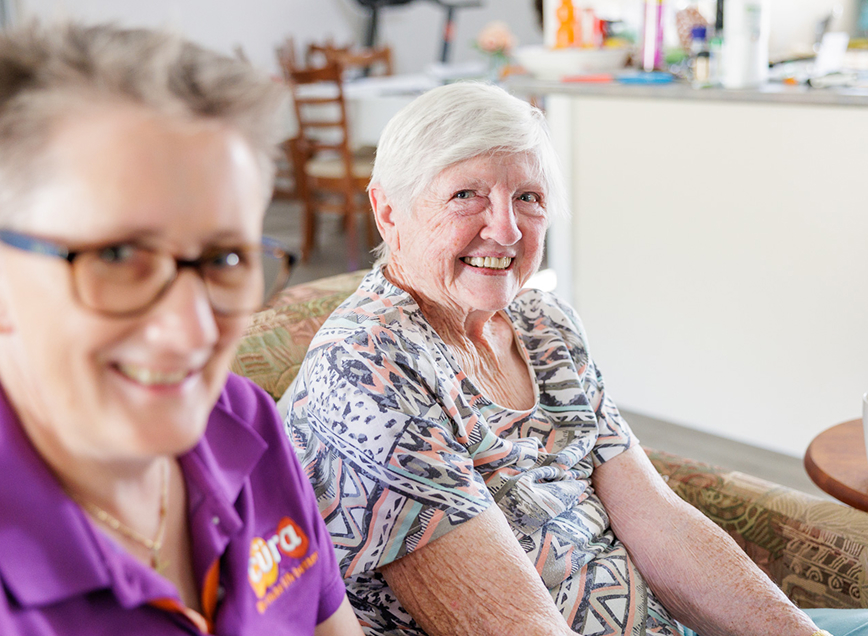
The Support At Home Program.
At Cura Aged Care, we believe that every person deserves to feel confident and supported as they age. The Support at Home program introduced by the Australian Government on 1 November 2025, is designed to make it easier for older people to receive the right help at the right time—while continuing to live comfortably in their own home.
The Support at Home program replaced the previous Home Care Packages (HCP) and Short‑Term Restorative Care (STRC) programs on 1st November 2025. Over time, the Commonwealth Home Support Program (CHSP) will also transition under the program, and our role is to guide you through these changes and ensure your care continues seamlessly.
Keeping You Informed Every Step of The Way.
The Support at Home program has introduced a simpler, more flexible way to access in‑home care. It focuses on your goals, your independence, and your wellbeing. At Cura, we’re here to help you understand how the program works, what support you can receive, and how to make the most of your funding.
Our priority is ensuring you feel informed, supported, and confident in your care journey.
Download Support at Home information

What The Support At Home Program Offers.
Support at Home provides a clear list of services grouped into three categories. These services are designed to support your health, independence, and everyday living. The program also includes services that support culturally safe care, including assistance to participate in cultural activities and access to Aboriginal and Torres Strait Islander health practitioners and health workers.
Clinical Supports.
Specialised care to maintain or improve your health and functional ability. These services help you stay well, manage health conditions, and access professional care at home.
Examples include:
- Nursing care
- Allied health & other therapeutic services
- Nutrition
- Care management
- Restorative care management
Independence Support.
Assistance with daily activities to help you stay independent and connected. These services focus on supporting your day‑to‑day living and maintaining your independence.
Examples include:
- Personal care
- Social support & community engagement
- Therapeutic services for independent living
- Respite care
- Transport
- Assistive technology & home modifications
Everyday Living Support.
Practical help to keep your home safe, clean, and comfortable. These services help you manage routine tasks so you can continue living well at home.
Examples include:
- Domestic assistance
- Essential light gardening
- Home maintenance & repairs
- Meal preparation support
Ongoing Care Under Support At Home.
If you are approved for ongoing services, you will be assigned one of eight Support at Home classifications, each with its own level of funding. Your classification reflects your care needs, with funding for care management allocated and accessible by your chosen service provider.
People with more complex needs may receive additional clinical or allied health support, helping them remain at home for longer with the right level of assistance.
Short‑Term Pathways.
In addition to ongoing support, the Support at Home program includes three short‑term pathways designed to meet specific needs.
Restorative Care Pathway.
Short‑term, goal‑focused care to help you regain strength, mobility, or confidence. This pathway uses coordinated allied health and nursing services to help you stay independent and reduce the need for long‑term support.
Assistive Technology & Home Modifications (AT‑HM) Scheme.
End‑of‑Life Pathways.
How to Access Support At Home.
To receive Support at Home services, you will need an assessment through My Aged Care. This assessment determines your eligibility and the level of support you can receive. If you’re unsure how to begin, our team can guide you through the process—from setting up your My Aged Care account to preparing for your assessment.


Key Differences from Previous Programs.
The Support at Home program introduces:
- More consistent and equitable access to services
- A clearer list of available supports
- Quarterly budgets instead of annual budgets
- Price caps on services (from approximately July 2026)
- A 10% cap on care management fees
- A dedicated approach to assistive technology and home modifications
These changes are designed to make aged care simpler, fairer, and more responsive to your needs.
For Aboriginal & Torres Strait Islander People.
At Cura, we are committed to delivering care that respects culture, community, and connection.
The Support at Home program includes additional measures to ensure culturally safe and meaningful care, including:
- Support to participate in cultural activities
- Access to Aboriginal and Torres Strait Islander health practitioners and health workers
- A care management supplement for providers delivering tailored support
FAQ's.
How do I access Support at Home?
An aged care assessment will determine if you are eligible for ongoing or short-term Support at Home services. If you meet the requirements, you can apply for an assessment straight away. To apply visit the My Aged Care website.
What does an aged care assessment involve?
An aged care assessment helps determine the type of support that will best suit your needs at home. During the assessment, a trained assessor will talk with you about your health, daily routines, and the kind of help you feel would make life easier. The assessment is relaxed, conversational, and focused on understanding what matters most to you.
Your assessment will help determine:
- Your care needs and personal goals
- The services and supports that best suit you
- Your funding level and available resources
The assessor may also speak with your family or support person if you’d like them involved. The goal is to ensure you receive the right level of support to continue living safely and independently at home.
How long will it take to receive services?
How does the new Support at Home funding structure work?
The Support at Home program uses eight funding levels, each based on the outcome of your aged care assessment. Your level determines the quarterly budget you receive to support your care needs. These budgets are designed to give you more flexibility and clearer visibility over your available funds.
You can see the funding levels below:
| Classification Level. | Quarterly Budget. |
| Level 1 | $2,750 |
| Level 2 | $4,000 |
| Level 3 | $5,500 |
| Level 4 | $7,500 |
| Level 5 | $10,000 |
| Level 6 | $12,000 |
| Level 7 | $14,500 |
| Level 8 | $19,500 |
| End-of-life | $25,000 |
| Restorative Care | $6,000* |
*Per unit, maximum two units annually.
A key feature of the new Support at Home structure is that unused funds can roll over to the next quarter. You can carry over up to $1,000 or 10% of your quarterly budget—whichever is greater. This gives you more control and helps you plan for periods when you may need additional support.
What will Support at Home cost me?
You may be asked to contribute to the cost of your services based on what you can afford. Services Australia may request information about your income and assets to determine your contribution.
- Clinical services are fully funded – no contribution required.
- Independence support services receive moderate funding. Moderate client contribution required.
- Everyday living services may require a higher contribution due to reduced government funding.
What happens if I have transitioned from a Home Care Package?
If you previously received a Home Care Package (HCP), your transition to the Support at Home program depends on when your package was approved. The government has designed this process to ensure continuity of care and to make sure no one is disadvantaged.
If your HCP was approved before 12 September 2024:
You have automatically transitioned under existing (“grandfathered”) conditions, meaning your contribution arrangements and access to services remain protected. You will not be worse off under the new program.
If your HCP was approved between 13 September 2024 and 30 June 2025:
You have transitioned to Support at Home under the new funding structure from 1 November 2025. Your services continue, but your budget and contributions now follow the updated program rules.
Regardless of when you were approved, you do not need to change providers unless you choose to. Your ongoing relationships, routines, and care arrangements remain in place, and we will continue to support you through every step of the transition.
Can I save unused funds?
Yes. If you don’t use your full funding, you can carry over:
- Up to $1,000, or
- 10% of your budget, whichever is greater
This helps you save for unexpected care needs or changes in your situation.
How is my care managed?
Care management helps ensure you get the best from your services. Your provider will:
- Develop and regularly update your care plan
- Monitor your progress and changing needs
In addition to your ongoing funding amount, 10% of the value of your package is allocated to Care Management, including for those who self-manage their care. This amount is the same no matter who you choose as your provider.
Download Our Support at Home Guide.
Get your free guide and learn how Cura Aged Care can support you or your loved one to live independently at home.
Start Your Support at Home Journey With Confidence.
Contact us and let’s walk through it together.